
So, what is GEO in context of SEO, and why is everyone in digital marketing suddenly talking about it? If you’ve been keeping up with search trends in 2026, you’ve probably noticed the term “GEO” popping up more and more alongside SEO. This guide breaks down exactly what GEO in context of SEO means, how it works, and how you can start optimizing for it today.
What Is GEO in Context of SEO?
To understand what GEO in context of SEO really means, let’s start with the basics. GEO stands for Generative Engine Optimization — the practice of optimizing content so it gets picked up, cited, and referenced by AI-powered generative engines like ChatGPT, Google AI Overviews, Perplexity, Claude, and Gemini.
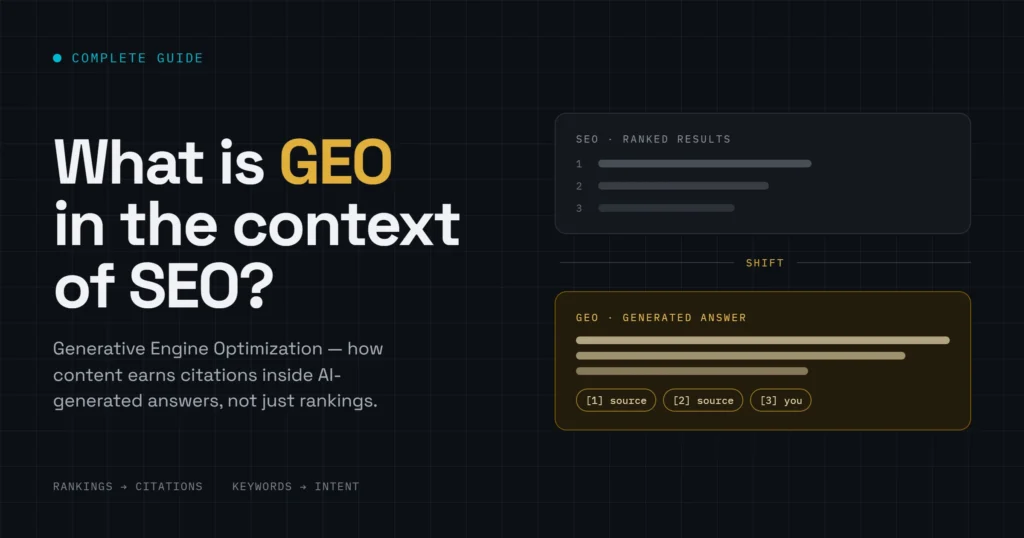
While traditional SEO focuses on ranking your pages in classic search engine results pages, GEO focuses on something different: making sure your content becomes part of the answer these AI tools generate when users ask questions.
GEO in Context of SEO vs Traditional SEO
Now that we’ve covered what GEO in context of SEO means on a basic level, let’s compare it directly to traditional SEO:
- SEO helps your website rank on a results page where users click through to your site.
- GEO helps your content become part of the answer an AI assistant gives directly to the user — often without a click at all.
This distinction matters more every day. More people are asking questions directly to AI chatbots instead of typing queries into a traditional search bar. If your content isn’t structured with GEO in mind, you risk becoming invisible in this new search landscape, even if your traditional SEO is strong.
Why GEO in Context of SEO Matters for Your Business
- AI search is growing fast. Tools like ChatGPT, Perplexity, and Google’s AI Overviews are increasingly becoming a first stop for research and questions.
- Zero-click answers are rising. Users often get their answer directly from an AI-generated summary, without visiting any website.
- Brand visibility depends on being cited. If AI engines don’t recognize your content as authoritative, your brand may lose visibility even in your niche.
- Early adoption is an advantage. Just like early SEO adopters gained a competitive edge, businesses that understand what GEO in context of SEO means today are positioning themselves ahead of the curve.
How to Optimize for GEO in Context of SEO
1. Write Clear, Well-Structured Content
AI models favor content that is easy to parse: clear headings, concise paragraphs, bullet points, and direct answers to specific questions.
2. Answer Questions Directly
Structure sections around real questions people ask, and answer them clearly near the top of each section — similar to how featured snippets work in traditional SEO.
3. Build Topical Authority
Generative engines tend to cite sources that consistently cover a topic in depth. Publishing comprehensive, well-researched content across a topic cluster helps establish your site as a trusted source.
4. Use Structured Data and Schema Markup
Structured data helps both traditional and AI-driven search engines understand your content’s context, improving the odds it gets surfaced accurately.
5. Keep E-E-A-T in Mind
Experience, Expertise, Authoritativeness, and Trustworthiness remain critical. AI engines, much like Google, prioritize content backed by credible sources, clear authorship, and factual accuracy.
6. Get Cited and Mentioned Elsewhere
AI models often pull from multiple sources to build their answers. Earning mentions, backlinks, and citations from other reputable sites increases your chances of being referenced.
Does GEO Replace SEO?
No — understanding what GEO in context of SEO means doesn’t mean throwing out your existing strategy. GEO complements SEO rather than replacing it. Many of the same principles that make content rank well in traditional search (quality, relevance, authority, structure) also make it more likely to be picked up by generative engines. The key difference is the added focus on clarity, directness, and citation-worthiness for AI systems specifically.
Final Thoughts
Now that you know what GEO in context of SEO means, it’s clear this is quickly becoming a necessary extension of any solid content strategy. As AI-powered search continues to reshape how people find information online, businesses that adapt their approach to serve both traditional search engines and generative AI engines will be best positioned for long-term visibility.
If you haven’t started thinking about GEO in context of SEO yet, now is the time to begin — before your competitors get there first.
